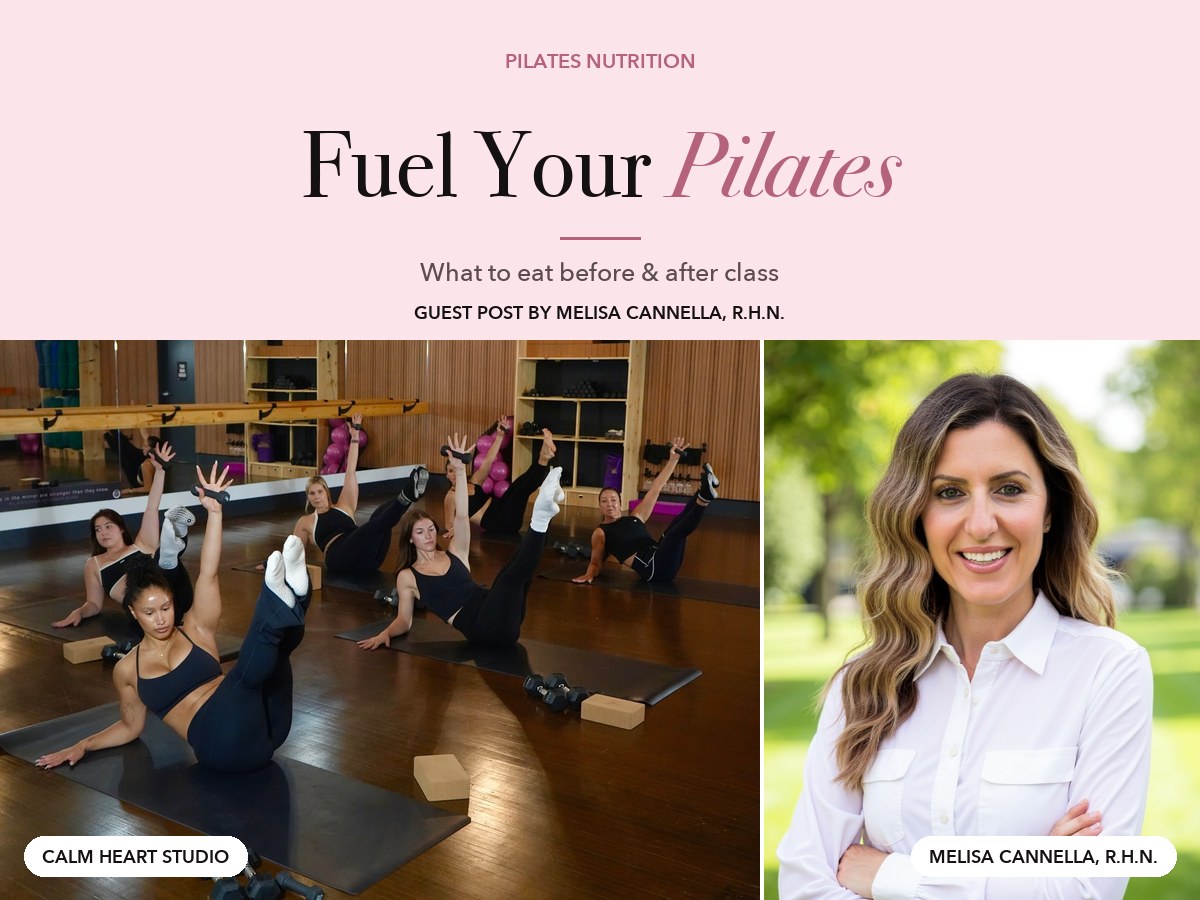
By Melisa Cannella, Registered Holistic Nutritionist (R.H.N.) and founder of Mel Can Nourish
Ever wonder whether you should eat before Pilates, or what your body needs after a workout?
Whether you’re attending a Reformer class, mat Pilates or a more challenging session, what you eat throughout the day can influence your energy, performance and recovery.
The good news? You don’t need a complicated meal plan or an elaborate supplement routine to support your Pilates practice. A few simple nutrition habits can go a long way.
Key takeaways
- If it’s been several hours since you last ate, a snack or meal with carbohydrates and some protein can help you feel energized for class.
- With one to three hours to go, try Greek yogurt with berries, whole-grain toast with an egg, oatmeal with yogurt, or a banana with nut butter.
- Short on time? A banana or a small yogurt 30–60 minutes before class may be enough. Avoid a large meal right before class.
- Your total protein intake across the day matters more than having a shake the moment class ends.
- Protein supplements aren’t a requirement. Many people can meet their needs through regular foods.
What should you eat before Pilates?
If it’s been several hours since you last ate, having a snack or meal before class may help you feel more energized and ready to move.
Carbohydrates are your body’s primary source of energy during exercise, making them an important part of your pre-workout nutrition. Including some protein can also help create a more balanced and satisfying snack.
If you have one to three hours before class, consider:
- Greek yogurt with berries
- Whole-grain toast with an egg
- Oatmeal topped with yogurt
- A banana with a little nut butter
Short on time? A banana or a small yogurt 30–60 minutes before class may be enough.
The key is to avoid going into a workout feeling overly hungry, while also allowing enough time to digest. A large meal immediately before Pilates may leave you feeling uncomfortable during certain movements, particularly exercises involving core engagement.
Pay attention to how your body responds and find what works best for you.
Protein after Pilates: does timing matter?
Protein plays an important role in muscle repair and recovery. It provides amino acids that help your body maintain and rebuild muscle tissue following exercise.
For many regularly active individuals, a general daily protein guideline is approximately 1.2–1.6 grams per kilogram of body weight. Individual requirements will vary depending on activity level, age, training intensity and personal health goals.
But here’s something important: you don’t necessarily need a protein shake immediately after your Pilates class.
Your overall protein intake throughout the day matters more than rushing to consume protein the moment your workout ends. Including a source of protein in your regular meals and snacks is a practical way to support recovery.
Some easy post-workout options include:
- Greek yogurt with fruit and seeds
- Eggs with whole-grain toast
- A smoothie made with milk or Greek yogurt
- Chicken or salmon with vegetables and rice
- Cottage cheese with berries
And remember, protein supplements aren’t a requirement. Many people can meet their nutritional needs through regular foods.
What does the research say about protein and Pilates?
Interestingly, a 2025 study looked specifically at whether additional protein supplementation could improve the benefits of Pilates training.
Researchers followed 19 experienced female Pilates participants over 10 weeks. The women completed Reformer and Cadillac Pilates training at least twice per week.
The participants improved their core muscle endurance and joint flexibility, regardless of whether they received additional protein supplementation.
One important detail: the women were already consuming an average of approximately 1.3 grams of protein per kilogram of body weight daily through their usual diets.
The researchers concluded that adding protein supplementation did not produce significantly greater improvements in the measured outcomes.
While this was a relatively small study involving trained women, it offers an interesting reminder: additional supplements aren’t automatically necessary when your everyday nutrition is already supporting your activity level.
The bottom line: nourish your body beyond the studio
Pilates challenges your body in different ways, helping develop core strength, muscular endurance, stability and flexibility.
But supporting your body doesn’t stop when you leave the studio.
Eating balanced meals, getting enough protein, including carbohydrates for energy and staying hydrated are all part of building a foundation that supports your movement and recovery.
You don’t need to overcomplicate it. Start with consistent, nourishing food choices and pay attention to what helps you feel your best.
Because a strong Pilates practice deserves strong nutritional support, too.
This article is intended for general educational purposes and is not a substitute for individualized medical or nutrition advice. Nutritional needs vary from person to person.
Put it into practice at Calm Heart Studio
Fuelled up and ready to move? Both of our studios, Calm Heart Lakeshore in Etobicoke and Calm Heart Wilson in North York, offer Reformer Pilates, mat Pilates, Signature Vinyasa yoga, barre and weight training.
- Try everything with our 30 Days of Calm pass: 30 days of unlimited classes, one class per day, valid for every class we offer.
- Explore our Reformer Pilates classes for every level.
- New to the studio? Read Pilates for beginners and what to wear to Pilates.

About Melisa Cannella, R.H.N.
Melisa Cannella is a Registered Holistic Nutritionist and founder of Mel Can Nourish. She works with organizations and individuals to improve energy, focus and overall well-being through practical wellness education and personalized nutrition guidance.
Her approach translates everyday habits and health challenges into simple, actionable strategies for nutrition, movement, rest and balance, helping people build sustainable habits and feel their best both at work and in life.
Leave a Reply